
·5 min read
Pitted and Spalling Concrete in Your Toronto Garage or Commercial Space? Here's Why It Happens
If your concrete floor looks like the surface of the moon — pocked with small craters, rough patches, and areas where chunks of surface have broken off — you're dealing with spalling. In Toronto, it's extremely common. Here's what causes it and how to fix it before it becomes a structural problem.
What Is Concrete Spalling?
Spalling is when the surface layer of concrete breaks away, leaving behind rough, pitted patches. It can look like:
- Small craters or pockmarks across the surface
- Flaking or peeling of the concrete itself (not a coating — the concrete)
- Rough, sandy patches where the surface aggregate is exposed
- Larger chunks breaking away from the edges or corners
Why Toronto Is Especially Hard on Concrete
The freeze-thaw cycle is the primary culprit. Here's the process:
- Water penetrates into the porous concrete surface
- Toronto temperatures drop below freezing
- The water expands as it freezes — increasing in volume by about 9%
- This expansion creates internal pressure within the concrete
- The surface fractures and breaks away
- Repeat 30-50 times per winter
Over 5-10 winters, even well-poured concrete shows significant spalling damage.
Road salt and de-icers make it dramatically worse. The chemicals lower the freezing point of water, which means freeze-thaw cycles happen at temperatures where they wouldn't otherwise occur. Salt-treated concrete spalls 3-5x faster than untreated concrete.
The Problem With Leaving It
Spalling doesn't stop on its own. Each winter, water gets into the new cracks and rough areas, and the damage accelerates. What starts as surface pitting can progress to deeper structural damage in the slab — at which point repair becomes significantly more expensive.
The rebar inside the concrete slab is also at risk. When concrete spalls deeply enough to expose rebar, the metal begins to rust. Rusting rebar expands, causing more concrete to break away — a cycle that's difficult and expensive to reverse.
How We Repair Spalled Concrete
Professional spalling repair is a multi-step process:
1. Assessment — we determine the depth and extent of the damage and check for rebar exposure
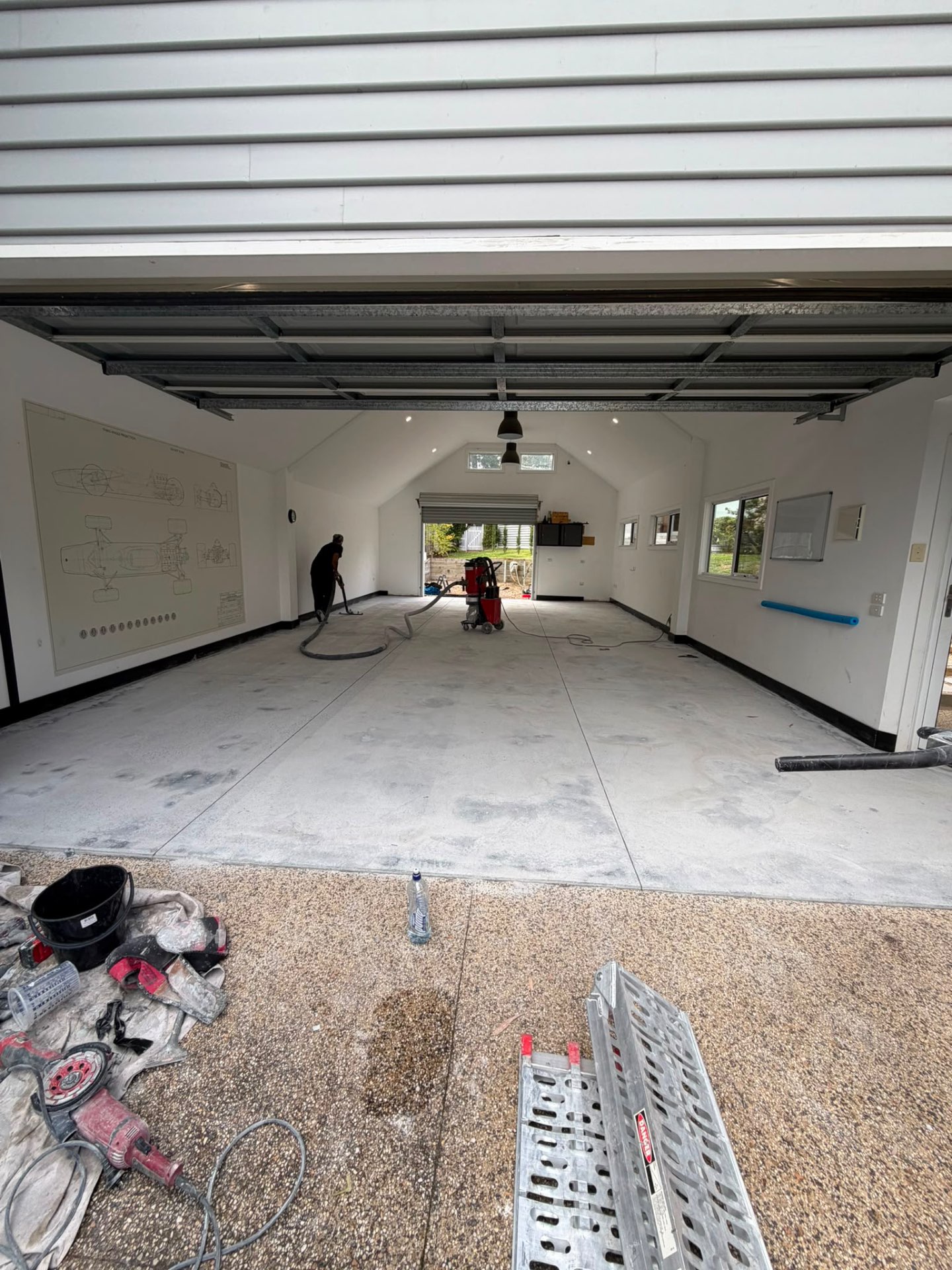
2. Surface grinding — diamond grinding removes loose material and creates a clean, sound surface
3. Filling — polyurea or cementitious filler is worked into every pit and crater, then ground flush
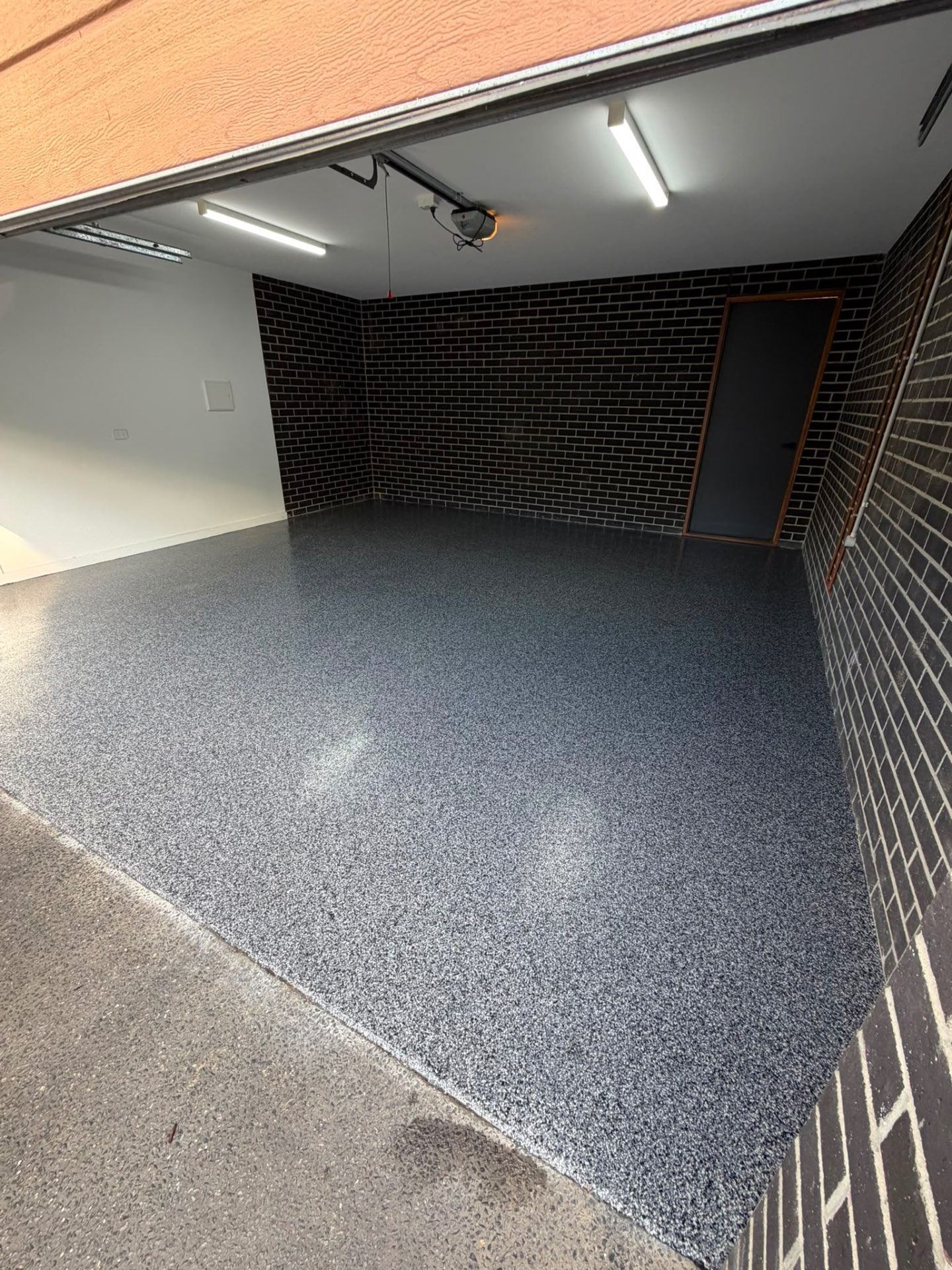
4. Epoxy system — a professional epoxy base coat penetrates the repaired surface, followed by a top coat that seals everything and prevents future water penetration
The result is a surface that's smooth, sealed, and protected against future freeze-thaw damage. The epoxy barrier means water can no longer penetrate the concrete — eliminating the root cause of spalling.
When to Call a Professional
If you're seeing:
- Pitting across more than 20% of the floor surface
- Chunks of concrete breaking away
- Exposed aggregate or rebar
- Rapid year-over-year deterioration
...it's time for professional repair rather than DIY patching. Surface-only patching without proper preparation rarely lasts more than one or two winters in Toronto's climate.
Book a free concrete assessment with Buildwell Flooring Solutions. We serve Toronto, Mississauga, Brampton, Vaughan, Scarborough, and all of the GTA.